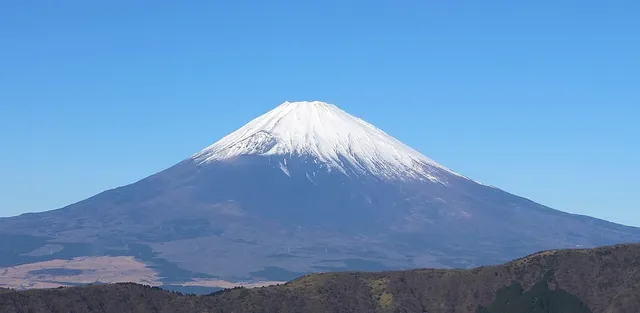
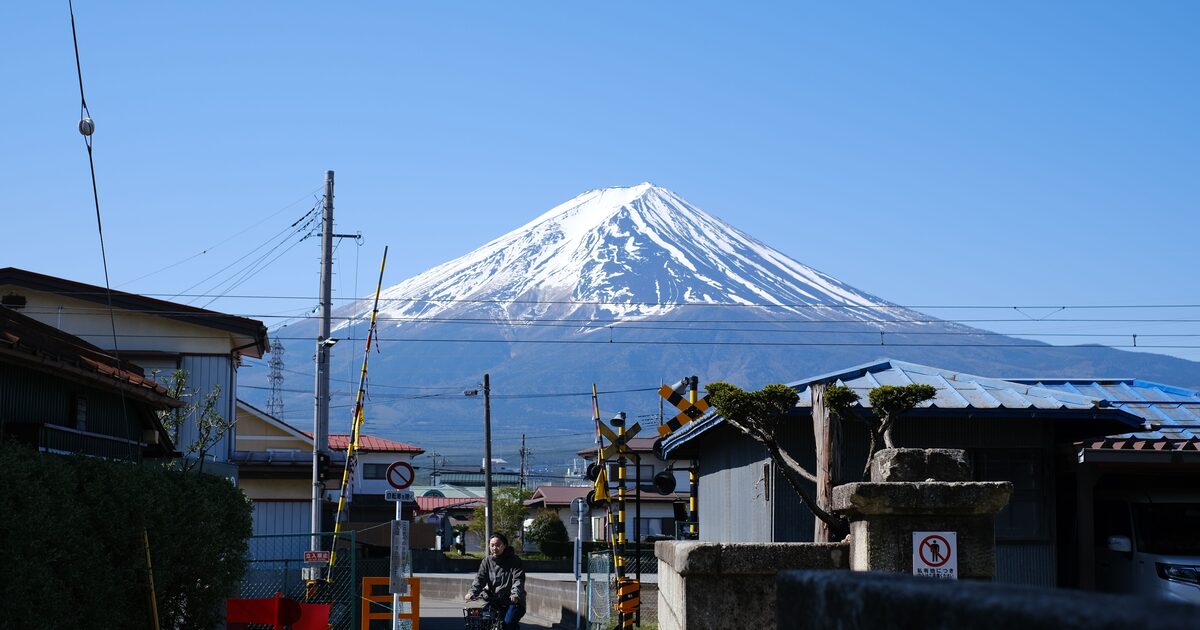
Everyone arrives in Tokyo half-expecting Mount Fuji to hang over the city the way it does in the woodblock prints. Then they spend three days looking at a white summer sky and wondering if the whole thing is a myth. It isn’t — but to see Mount Fuji from Tokyo you need two things most visitors don’t plan for: the right vantage point, and honestly, the right season.
You can see Mount Fuji from Tokyo — it stands about 100 km (62 mi) southwest of the city — from high, west-facing observation decks such as the Tokyo Metropolitan Government Building, Tokyo Skytree and the Bunkyo Civic Center. The catch is atmosphere: the mountain shows mainly on clear, dry winter mornings and hides for weeks behind summer haze.
Here’s where to go, what each spot costs, and when your odds are actually good.
The viewpoints that earn their reputation
Tokyo Metropolitan Government Building (Shinjuku) — free. The twin observatories on the 45th floors of the city government’s headquarters sit at 202 m (663 ft), and they face the right way: on a clear day Mount Fuji rises straight out of the western sprawl. Tokyo’s official tourism site lists it among the city’s best Fuji viewpoints, and it’s hard to argue with the price. Go early — both for visibility and for shorter lines.
Tokyo Skytree (Sumida) — paid. At 634 m (2,080 ft), the Skytree is the tallest structure in Japan, with observation decks at 350 m (1,150 ft) and 450 m (1,480 ft). It’s east of the city center, so Fuji appears beyond the entire width of Tokyo — a genuinely cinematic sight when conditions cooperate, with the mountain floating above an ocean of buildings. The height buys you a little extra reach over the low-level murk, but no tower outclimbs a truly hazy day.
Bunkyo Civic Center (Korakuen) — free, with a caveat. A cult favorite: the 25th floor observation lounge, 105 m (344 ft) up, frames Fuji rising directly behind the skyscrapers of Shinjuku — the classic stacked photo you’ve seen online, through tilted glass designed to kill reflections. The caveat: access has occasionally been limited for renovation work, so confirm the lounge is open before making a special trip. When it’s open, it’s arguably the best free Fuji composition in the city.
Beyond the big three, the same logic finds you other spots: you want height, an unobstructed line to the southwest, and ideally a west-facing window late in the day when the mountain silhouettes against the sunset. Riverside high-rises, hotel sky bars and even the windows of a westbound Shinkansen out of Tokyo Station all work on the right day.
When you can actually see it
This is the part the brochures soft-pedal, so let’s be plain: on a random summer afternoon, your chances are poor. Fuji is roughly 100 km away, and 100 km of humid, hazy midsummer air is effectively a curtain. The mountain is visible from Tokyo on clear days — Wikipedia says exactly that, and the operative word is clear.
The pattern that matters:
- Winter is the season. From roughly December to February, cold dry air scrubs the atmosphere and Fuji appears far more often than in any other season — some viewpoint guides put good December days at better than every other day. Summer is the opposite extreme: hot, humid, and hazy, with the mountain hidden for long stretches.
- Morning beats afternoon. Haze and convective cloud build through the day, so the first hours after sunrise are the reliable window even in winter. A second, shorter chance comes right at sunset, when Fuji can reappear in silhouette against the afterglow.
- After rain or wind is a gift. A front that washes or blows the haze out of the basin can produce startling clarity in any season. If yesterday was stormy and today dawned blue, drop your plans and get up a tower.
Set expectations accordingly: in January, a patient visitor with two or three free mornings will very likely see the mountain; in July or August, treat any sighting as a bonus. Snow cover follows a similar calendar — the summit wears its iconic white cap for the colder months (the cone is snow-covered for around five months a year), which is also when you can see it at all. The prints weren’t lying; they were just all painted in the right season. If you can leave the city, the best places to see Mount Fuji outside Tokyo run on the same winter calendar.
Is that actually Fuji?
One last honest problem: from 100 km away, at the hazy limit of visibility, a faint triangle on the horizon is easy to misread. Tokyo’s skyline serves up plenty of impostors — nearer, lower ridgelines of the Tanzawa and Okutama mountains sit in the same westerly quadrant and catch the same sunset light. Fuji’s giveaways are its size, its isolation and its almost perfect symmetry; at 3,776 m (12,389 ft) it stands head and shoulders above everything else on that horizon, which is what made it one of the most recognizable mountains on Earth in the first place.
Or skip the squinting: point the app at the skyline and it settles the question in seconds — confirming whether that pale cone is really Fuji, with its elevation, prominence and distance attached. There’s a particular satisfaction, 202 m up a free observatory on a sharp January morning, in getting the name in writing.
The real peaks
Genuine photographs of the summits above — so you know what to actually look for: