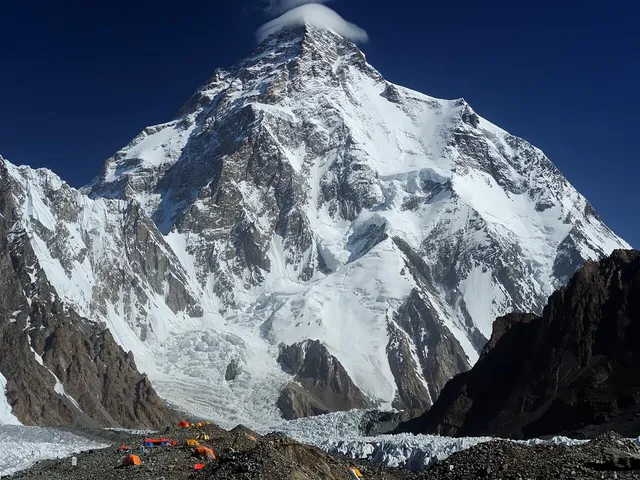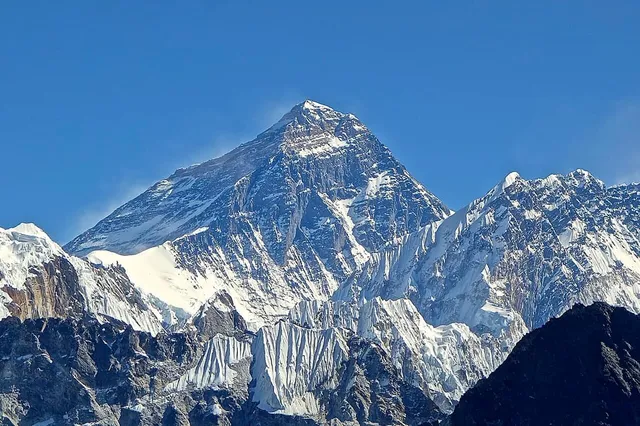
Every famous mountain collects nicknames, but K2’s is different: it reads like a warning label. “The Savage Mountain” isn’t tourist-board poetry — it’s a direct quote from a man who had just nearly died on it. If you’ve wondered why K2 is called the savage mountain, the answer has a name, a date, and one of the most famous sentences in mountaineering.
K2 is called the Savage Mountain because of American climber George Bell, who came down from the failed 1953 American expedition — having nearly slipped to his death — and told reporters: “It’s a savage mountain that tries to kill you.” The name stuck because the mountain kept proving him right: steeper, stormier and historically far deadlier than Everest, despite standing about 238 m lower.
One sentence from a broken expedition
The 1953 American Karakoram expedition, led by Charles Houston, is remembered less for how high it got than for how it fell apart — and how its members held together. Pinned down by a storm high on the mountain, the team tried to lower a climber, Art Gilkey, who had been struck by thrombophlebitis. During the descent one man slipped, dragging others with him; five roped climbers were falling toward the void when Pete Schoening, almost impossibly, arrested the whole tangle with a single ice-axe belay — an act still known in climbing simply as “The Belay.” Gilkey was lost soon after, swept away in circumstances never fully settled; the rest barely got down alive.
Bell — a physicist who had been among the fallers — delivered his verdict at the bottom, and the press did the rest. Note what the nickname is and isn’t: it’s documented, first-person framing from a survivor, not an ancient local legend. K2 is so remote that, as the Wikipedia entry notes, it may never have acquired an established local name at all — the surveyor’s label “K2”, jotted down in the 1856 British survey of the Karakoram, stuck partly because there was no traditional name in common use to displace it. A mountain named like a specimen, nicknamed like a predator.
Lower than Everest, harder than Everest
On paper the comparison looks close: K2 stands 8,611 m (28,251 ft) to Mount Everest’s 8,848.86 m (29,031.7 ft). In practice they are different sports, and the difference is the substance behind the nickname.
Steepness with no easy line. Everest’s standard routes, for all their dangers, include long stretches of walkable terrain. K2 offers nothing comparable: every route is sustained, technical climbing on steep rock and ice, with landmark obstacles — the House’s Chimney rock pitch, the Black Pyramid, the ice-cliff-menaced Bottleneck couloir near the summit — arriving at altitudes where the body is already failing.
Worse weather, fewer windows. Sitting farther north than Everest, deep in the Karakoram on the Pakistan–China border, K2 catches ferocious, fast-moving storms and offers shorter, less predictable summit windows. The season is narrower and the penalty for mistiming it is severe. Fittingly, K2 was the last of the fourteen 8,000 m peaks to be climbed in winter — a Nepali team finally did it in January 2021, sixty-six years after the first ascent.
Remoteness. Everest base camp can be trekked to through inhabited valleys past teahouses. K2’s base camp requires roughly a week’s walk up the Baltoro Glacier beyond the last village, far from rescue, resupply or a view of the mountain from any settled place. That isolation is also why casual “spot K2 from town” moments essentially don’t exist — unlike the celebrity peaks in our roundup of the most recognizable mountains, K2 must be earned even as a sight.
The record. Exact fatality statistics vary by source and cutoff date, so treat specific ratios cautiously — but the documented pattern is stark. Through the twentieth century, K2 killed on the order of one climber for every four or five who summited, against a rate in the low single digits percent on Everest. Since the first ascent by Achille Compagnoni and Lino Lacedelli of Ardito Desio’s Italian expedition on 31 July 1954, entire years have passed with no one reaching the top at all, and single seasons — 1986, 1995, 2008 — have taken a dozen or more lives.
A nickname under review
Is the savagery fading? Recent seasons complicate the legend: commercial expeditions with big Sherpa support, fixed ropes and better forecasting have pushed hundreds of climbers to the summit — a few recent summers saw more ascents than the preceding decades combined — and the death-per-summit ratio has dropped sharply, a shift covered at length in the climbing press. The mountain hasn’t softened; the margin around it has widened, at least in good weather, at least on the standard route. We break down exactly what that ratio counts, and why it fell so fast, in the deadliest mountains, and what those death-rate numbers actually measure.
But statistics measure outcomes, not the mountain. The Bottleneck’s ice cliffs still calve without warning, the storms still arrive on their own schedule, and the terrain still refuses to offer a single easy metre. Bell’s sentence has outlived every era of gear since 1953 because it describes character, not a casualty count.
You will probably never stand beneath K2 — its remoteness sees to that. But its profile turns up constantly in documentaries, photo feeds and posters, often mislabeled. Point the app at any image-perfect steep pyramid you can actually see, and you’ll know in seconds whether you’ve met a savage or just a lookalike — elevation, prominence and name, no legend required.
The real peaks
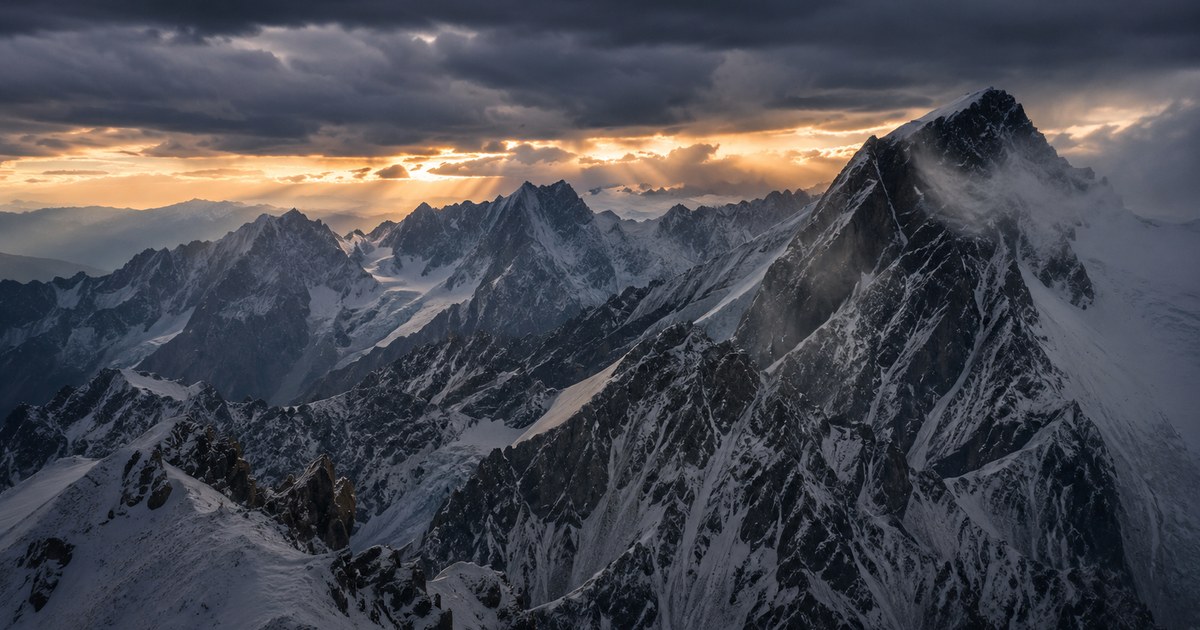
Genuine photographs of the summits above — so you know what to actually look for: