Climb the highest mountain on every continent and you’ve done the Seven Summits — the most famous checklist in mountaineering. It sounds beautifully simple, and mostly is. But ask two climbers what are the Seven Summits, exactly, and you may get two different seventh mountains. Forty years on, the sport still runs two competing versions of the list.
The Seven Summits are the highest mountains on each continent: Everest (Asia), Aconcagua (South America), Denali (North America), Kilimanjaro (Africa), Elbrus (Europe), Vinson (Antarctica), and — depending on the version — Kosciuszko in Australia or Puncak Jaya in Oceania. The Bass and Messner lists agree on six peaks and disagree only on that seventh.
What are the Seven Summits: the full list with heights
Six of the seven are undisputed. Heights below are the commonly cited figures; as always, individual surveys vary by a few metres.
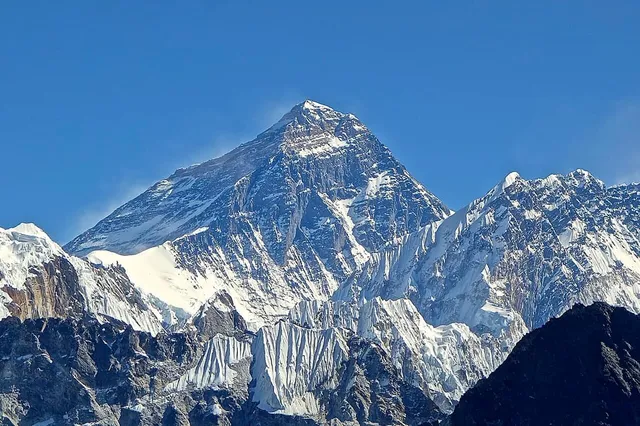
- Asia — Mount Everest: 8,849 m (29,032 ft). The highest point on Earth, per the joint figure Nepal and China announced in 2020 (8,848.86 m).
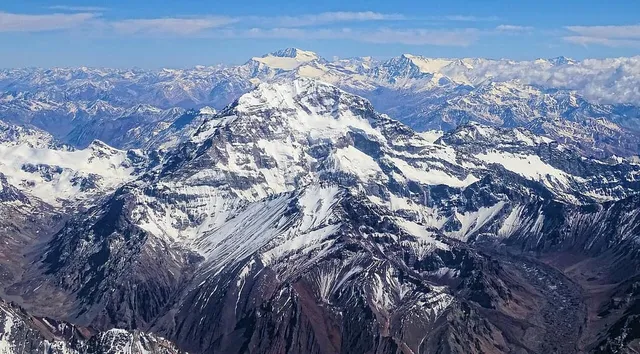
- South America — Aconcagua: 6,967 m (22,858 ft), Argentina. The highest mountain anywhere outside Asia.
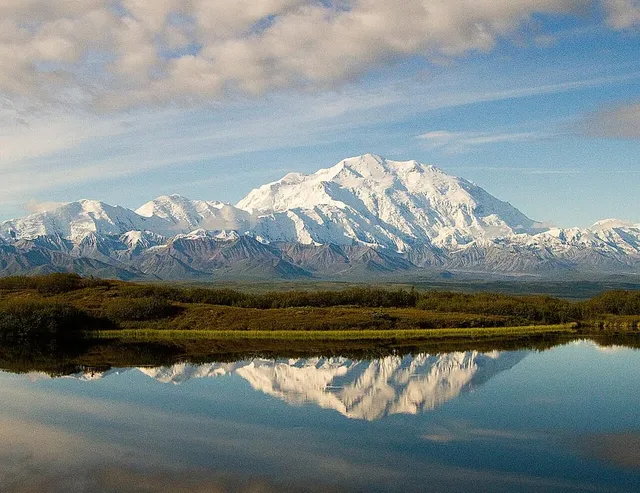
- North America — Denali: 6,190 m (20,310 ft), Alaska.
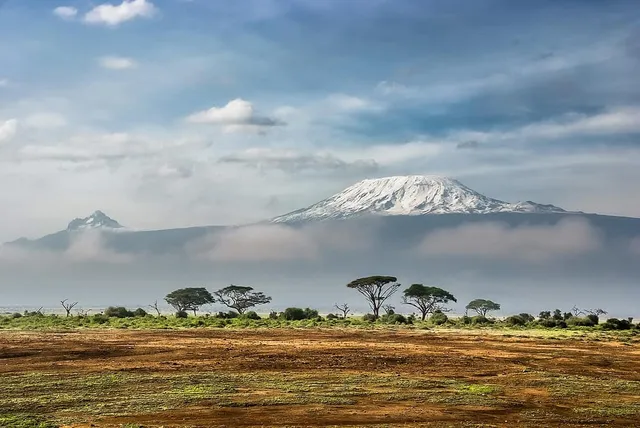
- Africa — Kilimanjaro: 5,895 m (19,341 ft), Tanzania. A free-standing volcano, and the most-climbed of the seven.
- Europe — Mount Elbrus: 5,642 m (18,510 ft), a dormant volcano in Russia’s Caucasus.
- Antarctica — Vinson Massif: 4,892 m (16,050 ft), in the Sentinel Range, about 1,200 km from the South Pole. Strictly, that height belongs to Mount Vinson, the summit; the massif is the larger block it sits on, a distinction the US names committee made official in 2006.
Then comes the seventh, and the argument.
- Australia — Mount Kosciuszko: 2,228 m (7,310 ft), New South Wales. On the Bass list.
- Oceania — Puncak Jaya (Carstensz Pyramid): 4,884 m (16,024 ft), Papua, Indonesia. On the Messner list.
Bass vs Messner: how one list became two
The Seven Summits as a project was popularized by Richard Bass, a Texas businessman and amateur climber. In 1983 he knocked off six of the peaks — Aconcagua, Denali, Kilimanjaro, Elbrus, Vinson and Kosciuszko — and in 1985 he summited Everest, becoming the first person to complete the set he’d defined. Bass counted the continent of Australia, whose highest point is Kosciuszko: a gentle, popular walk-up in the Snowy Mountains.
Reinhold Messner — the most influential alpinist of his era — looked at the list and objected to exactly one entry. If you define the continent as Oceania (or Australasia), the high point isn’t Kosciuszko at all: it’s Puncak Jaya, also called Carstensz Pyramid, a steep 4,884 m (16,024 ft) rock peak on the island of New Guinea. Messner’s version swaps it in, and in 1986 Canadian climber Pat Morrow became the first to complete the Messner list, with Messner himself finishing his own version later that year.
So the divergence is a geography question wearing a mountaineering costume. Is the relevant landmass mainland Australia, or the wider Oceania region that includes New Guinea? Both framings are defensible, which is why neither list has ever managed to kill the other.
Why the swap matters more than it looks
The two candidate peaks could hardly be more different. Kosciuszko is a maintained trail you can comfortably ascend in a day — the summit “climb” is a hike. Carstensz Pyramid is a genuine technical rock climb in remote highland jungle, with serious access and permit complications — and, at 4,884 m (16,024 ft), it also happens to be the highest island peak on Earth, more than twice Kosciuszko’s height. Swapping one for the other changes the character of the entire project: the Bass list is a test of altitude, logistics and endurance; the Messner list adds real climbing to it.
That’s why the mountaineering community broadly treats the Messner list as the more credible achievement, while the Bass list survives on historical priority and accessibility. Many climbers settle it by doing all eight — sometimes called the Seven Summits “plus one” — which neatly ends the argument at the cost of one extra expedition.
There’s a quieter border dispute hiding in the list, too: Elbrus stands in the Caucasus, on the fuzzy boundary between Europe and Asia. The dominant convention puts the range’s crest in Europe, making Elbrus the continent’s high point — but under a stricter drawing of the line, Europe’s summit would be Mont Blanc. The Oceania question just happens to be the one the two founding lists formalized.
Reading the list like a spotter
Notice what the Seven Summits are not: the seven highest mountains in the world. Those are all in Asia — the Himalaya and Karakoram monopolize the top of the elevation table, so a continental list is the only way peaks like Vinson or Kilimanjaro get into elite company. What the seven do dominate is prominence: because each is the high point of an entire landmass, every one of them ranks among the most independent summits on Earth. Kilimanjaro rising alone from the East African plains and Denali towering over Alaska are the textbook cases — enormous vertical relief you can see from a hundred kilometres away.
That makes the Seven Summits, whichever version you prefer, a surprisingly good spotting list: these are mountains that own their horizons. Catch one from a plane window or a distant highway, point the app at it, and the name comes back with the numbers — elevation, prominence, and the continent it crowns — no matter which side of the Bass–Messner debate you take.
The real peaks
Genuine photographs of the summits above — so you know what to actually look for: